
Author: John Fitts
TLDR
Successful Oracle AIDP adoption depends as much on how your organization works as on the platform itself. The question of whether the business or IT should own the platform has a simple answer: both, with the two sides moving closer together rather than handing work back and forth across a gap. In practice, that means business users working with data directly, asking questions in natural language and getting real-time visibility into things they used to wait weeks for, while IT shifts from gatekeeper to enabler with governance and security staying firmly in place. From a skills perspective, most organizations don’t need to hire a new team to get there, because the right person for the job is usually already in the building and just needs upskilling. This guide is drawn from Vertice’s delivery experience, including our work with University College Dublin Clinical Research Centre.
What Does Successful Oracle AIDP Adoption Involve?
Oracle AI Data Platforms (AIDPs) is Oracle’s unified environment for building, governing, and operationalizing AI and data workloads on enterprise data. We’ve covered the platform itself in our practitioner’s guide to Oracle AIDP, and we’ve written separately about how to assess Oracle AIDPs readiness before you invest.
This piece picks up where the readiness conversation ends. Once you’ve decided AIDP is the right move, the question becomes what actually has to change inside the business to get the value out of it. In our experience, the technology is the easy part. The organizations that get the most from AIDP are the ones that treat it as a change in how they work, and the ones that struggle are the ones that treat it as an installation.
Who Should Own Oracle AIDP: The Business or IT?
Short answer, both. But maybe not in the way people expect.
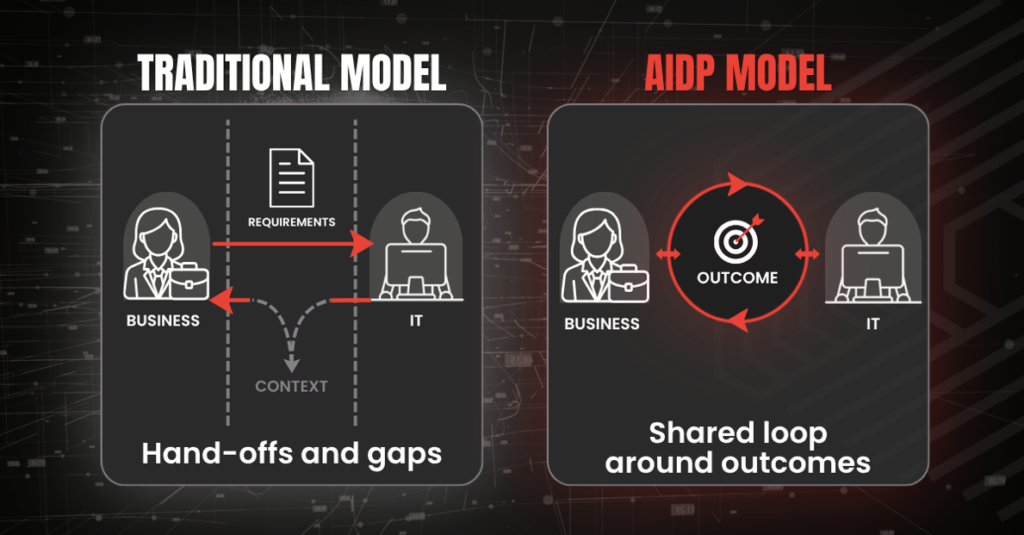
Rather than one side taking over or the other stepping back, the shift is about the two sides getting closer together in how they work. Traditionally, the business defines what it needs, hands it to IT, IT builds something and hands it back. There’s a gap in the middle where context gets lost, priorities drift, and the end result doesn’t quite land the way anyone intended.
AIDPs works best when that gap shrinks. When the business stays close enough to validate that what’s being built actually serves the outcome they’re after. And when IT understands the business context well enough to make the right technical decisions along the way.
That shift is cultural far more than it is technological. And it’s probably the hardest one to make because it means changing habits rather than tools. But the organizations we’ve seen get the most value from AIDP are the ones where business and technology are working through it together from the start, instead of handing things back and forth.
What New Habits Does a Business Need to Adopt to Get Value from Oracle AIDP?
The biggest one is probably the simplest to describe and the hardest to do. It’s treating data as a shared responsibility rather than something only IT handles.
When AIDP is working well, business users are interacting with data directly. Asking questions in natural language, getting real-time visibility into things they used to wait weeks to see reports on. That’s a meaningful shift in how people work day to day.
But it only works if the business side is willing to engage with it. That means actually getting hands-on with the platform rather than only consuming a report someone else built. And on the flip side, IT needs to shift from being the gatekeeper of data to being the enabler. The governance is still there, the security is still there. But the access model opens up.
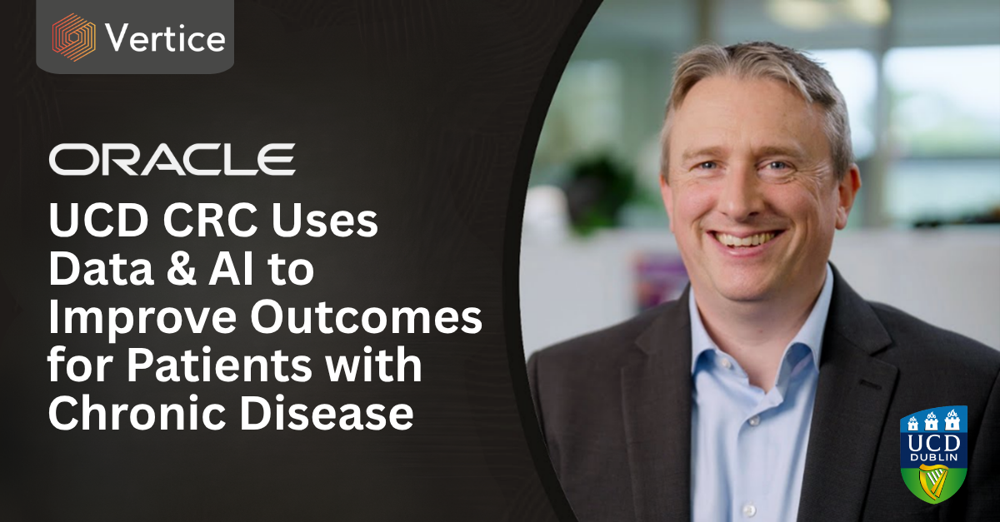
We saw this play out in our work with University College Dublin Clinical Research Centre, where one of the goals was to give research teams direct access to trial data through conversational agents rather than waiting on manual reporting cycles. That changed how the team worked on a daily basis. They went from requesting information to having it at their fingertips.
If you work in clinical research, pharma, or healthcare and want to see how this applies in a regulated environment, we’ve written more in our guide to Oracle AIDP for life sciences.
What Roles or Skills Does a Business Need to Add for Oracle AIDP?
This is one of the most common questions we get, and the honest answer is it depends. But there are some patterns we keep seeing.
In most cases, organizations don’t need to go out and hire a whole new team. What they usually need is to upskill the people they already have. Business analysts who know the domain need to get comfortable working with AI-ready data. Data engineers need to understand the business context behind what they’re building, beyond just the technical requirements. And leadership needs enough fluency to ask the right questions and make informed decisions about where to invest.
Where we do see new responsibilities emerging is around data governance and AI operations. Someone needs to own the data quality, the cataloging, the ongoing management of what’s feeding the platform. That’s often an existing role that expands rather than a brand-new hire.
The role that probably changes the most is the analytics or BI team. They go from building static reports to managing a platform that enables self-service access across the organization. That’s a fundamentally different job, and it’s one that requires a different mindset as much as different skills.
The theme across all of it, and this probably won’t surprise anyone at this point, is that the most successful transitions happen when the business side and the technology side are learning and evolving together rather than in isolation.
Next Steps
If you’re thinking about how Oracle AIDP would change the way your teams work and you want an honest conversation about it, Contact Us.
If you’re earlier in the journey, our practitioner’s guide covers what Oracle AIDP is, including the architecture, the Workbench, and the use cases in depth. And if you’re weighing up whether to invest, our Oracle AIDP readiness guide walks through the two signals we look for and the most common gap.
Frequently Asked Questions
Do we need to hire data scientists to use Oracle AIDP?
In most cases, no. Organizations typically get further by upskilling the people they already have, since the right person for the job usually already understands the business. Business analysts need to get comfortable working with AI-ready data, data engineers need to understand the business context behind what they’re building, and leadership needs enough fluency to ask the right questions about where to invest.
Does IT lose control of data with Oracle AIDP?
No. The governance is still there and the security is still there, but the access model opens up. The shift is that IT moves from being the gatekeeper of data to being the enabler, giving business users governed, secure access to information they previously had to request through reporting cycles.
Can business users work with data directly in Oracle AIDP?
Yes, and this is where much of the day-to-day value sits. Business users can ask questions in natural language and get real-time visibility into things they used to wait weeks to see in reports. In our work with University College Dublin Clinical Research Centre, research teams went from requesting trial data through manual reporting cycles to having it at their fingertips through conversational agents.
How does Oracle AIDP change the role of the analytics or BI team?
This is the role that changes the most. The team moves from building static reports to managing a platform that enables self-service access across the organization, which is a fundamentally different job requiring a different mindset as much as different skills.
Who should be responsible for data governance in an Oracle AIDP rollout?
Someone needs to own data quality, cataloging, and the ongoing management of what feeds the platform, and in our experience this is usually an existing role that expands rather than a brand new hire. If you’re unsure where your governance currently stands, our Oracle AIDP readiness guide covers how we assess this with the Data8 framework.
About John Fitts
John Fitts is a senior business strategist with 25 years translating between the boardroom and the technology stack. As US Vice President for Vertice and CEO of Fairfax Intel, he partners with C-suite leaders on the question most AI and data programs skip: not how, but why.
Contact us today to arrange an assessment or email:

John Fitts
Senior VP North America